The Canadian Quran Academy’s Islamic studies classes in Brampton teach Quranic tafsir, hadith sciences, Islamic jurisprudence, and Arabic grammar through structured online sessions. Students progress from foundational Islamic knowledge to advanced theological concepts under qualified instructors who balance traditional scholarship with contemporary Canadian contexts.
Brampton’s Muslim families need Islamic education that respects both heritage and daily reality. These classes address that gap. Students learn usul al-fiqh, seerah analysis, and aqeedah principles while navigating questions relevant to Canadian civic life, interfaith conversations, and professional ethics within Islamic frameworks.
More Details Pricing Testimonials
The Canadian Quran Academy structures Islamic studies classes in Brampton around four pillars: Quranic sciences, hadith methodology, Islamic jurisprudence, and Aqeedah foundations. Students don’t memorize facts—they learn how scholars derive rulings, trace hadith chains, interpret verses contextually, and apply Islamic principles to real situations facing Canadian Muslims today.
Lessons cover maqasid al-shariah, usul al-tafsir, narrator criticism in hadith studies, and comparative fiqh schools. Students analyze classical texts, discuss contemporary fatawa, and develop skills for independent Islamic research. Every session connects traditional scholarship to questions Brampton Muslims encounter: halal investment options, workplace prayer accommodations, and ethical consumer choices within Islamic guidelines.
The Canadian Quran Academy designs Islamic studies lessons sequentially—foundational concepts before advanced theology, linguistic tools before textual analysis.
Students learn how classical scholars interpreted Quranic verses through tafsir bil-ma’thur and tafsir bil-ra’y approaches. Lessons explain nasikh-mansukh principles, asbab al-nuzul contexts, and how jurists extracted legal rulings from ayat. Students read tafsir excerpts from Al-Tabari, Ibn Kathir, and contemporary scholars, comparing methodologies and understanding interpretive differences within Sunni tradition.
Classes teach students how muhaddithun authenticated narrations through isnad analysis and narrator criticism. Lessons cover hadith grading terminology—sahih, hasan, da’if—and explain why scholars accepted or rejected specific reports. Students examine mustadrak collections, explore fabricated hadith examples, and learn how fiqh rulings depend on hadith authenticity assessments made by classical and modern scholars.
Students study usul al-fiqh principles that underpin Islamic legal reasoning: qiyas, ijma, maslahah, and sadd al-dhara’i. Lessons explain differences between Hanafi, Maliki, Shafi’i, and Hanbali methodologies. Students analyze how scholars derive rulings from Quran and hadith, understand legitimate juristic disagreement, and apply fiqh frameworks to contemporary issues Canadian Muslims face regarding family law and financial transactions.
Students develop a strong foundation in Islamic Aqeedah, covering Tawheed, divine attributes, and belief in angels and prophets. Lessons focus on understanding authentic texts from Qur’an and Hadith, connecting theological principles to daily faith practice, and building reasoning skills that ensure correct understanding of essential Islamic beliefs.
Outcomes
Students learn to consult multiple tafsir sources, cross-reference scholarly opinions, and understand contextual factors influencing Quranic interpretation. They develop skills to read Arabic commentaries, identify interpretive methodologies, and recognize how classical and modern exegetes approach the same verse differently based on linguistic analysis, historical context, and juristic frameworks they employ.
Students gain practical ability to check hadith grades in reference works, understand why specific narrations carry disputed authenticity, and recognize reliable hadith collections. They learn to distinguish sahih chains from weak ones, understand narrator reliability assessments, and apply this knowledge when evaluating Islamic rulings or religious claims circulating in Brampton's Muslim communities.
Students understand how Islamic legal scholars derive rulings from primary sources through systematic methodologies. They learn to recognize valid scholarly disagreement, understand why multiple positions exist on issues, and apply usul al-fiqh frameworks to contemporary questions about financial transactions, medical ethics, and civic participation within Islamic legal boundaries.
Students explore fundamental concepts of Islamic Aqeedah, including oneness of Allah, His attributes, and the unseen realities. Lessons guide learners to understand creedal principles through Quranic verses and authentic Hadith. By the end, students can confidently explain and apply correct beliefs, avoiding misconceptions and strengthening personal faith..
Students study the Seerah of Prophet Muhammad ﷺ alongside core Aqeedah principles. Lessons cover his character, key events, and teachings, linking them to understanding divine attributes and correct belief. Learners gain insight into prophetic guidance, applying lessons from his life to strengthen faith and practice in contemporary Muslim communities.
Students learn to evaluate contemporary fatawa quality, recognize when speakers cite sources accurately, and distinguish between established scholarly consensus and individual opinions. They develop ability to assess religious claims critically, understand evidence requirements for Islamic rulings, and recognize when issues require consulting qualified scholars rather than accepting casual online explanations.
Why Choose us?
The Canadian Quran Academy's teachers hold recognized ijazah certifications in Quranic sciences, hadith, or fiqh from established Islamic institutions, ensuring authentic traditional scholarship transmission.
Islamic studies classes in Brampton follow systematic curriculum design—foundational concepts before advanced theology—preventing knowledge gaps that confuse students attempting independent Islamic research later.
Students read excerpts from Al-Ghazali, Ibn Taymiyyah, and other classical scholars during lessons, developing direct familiarity with authoritative sources rather than relying solely on secondary summaries.
Lessons connect classical scholarship to issues Canadian Muslims face: halal investment verification, medical ethics questions, and workplace accommodation requests within Islamic legal frameworks.
The Canadian Quran Academy maintains limited enrollment per session, allowing instructors to address individual student questions and ensure each learner grasps complex theological concepts thoroughly.
Islamic studies classes accommodate Brampton residents balancing careers and family responsibilities through evening and weekend session options that respect busy Canadian professional schedules.
Instructors explain Arabic terminology, teach relevant grammar principles, and help students develop reading skills needed for engaging classical Islamic texts without complete translation dependence.
The Canadian Quran Academy prices Islamic studies classes accessibly, removing financial barriers preventing Canadian Muslims from pursuing structured theological education beyond weekend lecture attendance.
Areas we serve in Canada
The Canadian Quran Academy serves students across Canada including Toronto, Vancouver, Montreal, Calgary, Ottawa, Edmonton, and Brampton, plus online learners worldwide.
Related Courses
The Canadian Quran Academy teaches beginner through advanced levels covering Quranic Arabic, Modern Standard Arabic, conversational skills, Tajweed, Hifz memorization, and Noorani Qaida foundations.
The Canadian Quran Academy delivers Arabic classes in Brampton designed around real linguistic progression—not surface-level vocabulary drills. Students engage with Arabic phonetics, sentence construction, conversational patterns, and grammatical frameworks that prepare them for authentic communication. Each lesson builds on practical Arabic speaking and Arabic listening skills rooted in measurable progression.
Explore Course
The Canadian Quran Academy offers Quran classes in Brampton designed for learners who want more than surface-level recitation. Students engage with Tajweed rules, Noorani Qaida foundations, Arabic phonetics, and Quranic comprehension through structured lessons. Each session prioritizes accuracy in Makharij, fluency in recitation, and gradual mastery of Classical Arabic grammar.
Explore Course
The Canadian Quran Academy delivers Quran classes for kids in Brampton through live, one-on-one sessions designed specifically for young learners aged 4 to 14. Lessons cover Noorani Qaida mastery, Tajweed-compliant recitation, Quran memorization techniques, and foundational Quranic Arabic grammar. Each session adapts to the child's learning pace, not a rigid schedule.
Explore CourseBuild authentic understanding of Islamic theology, jurisprudence, and textual analysis through structured classes led by qualified instructors.
Testimonials
Canadian Quran Academy graduates pursue advanced Islamic studies, lead community education initiatives, and apply theological knowledge in professional careers across Canada.
Alhumdulilah my son 7yr old loves his Quran classes. Sheikh Nour Eddin Mohmoud is very interactive and makes it very interesting for my son. MashaAllah my son has progressed in his Tajweed learning, applying and memorizing. After so many teachers finally found Sheikh Nour who understands and communicate with parents and listens as to what exactly one is looking for their child. I really recommend this institute and sheikh Nour . InshaAllah I want my other son to start with Sheikh Nour as well. Hope this helps for anyone who is looking to get their kids to learn online.
Alhamdulillah this is a great place to learn Quran, Islamic Studies, and Arabic. I took these three classes and gained a lot. They teach through zoom in one on one sessions where you decide the time and day. I used whatsapp as the communication and the coordinators were really responsive. For Quran, we would read the arabic together and then learn the tafsir. After that I would memorize the surah or a portion for the next class. For Arabic, it was a focus on vocabulary and conjugations of verbs. For Islamic studies you went through a text together. The teachers are really nice and you can ask anything. I found it enjoyable learning about a different culture as I was raised in America. Give it a try!
Real transformations from students who mastered the Quran with our courses
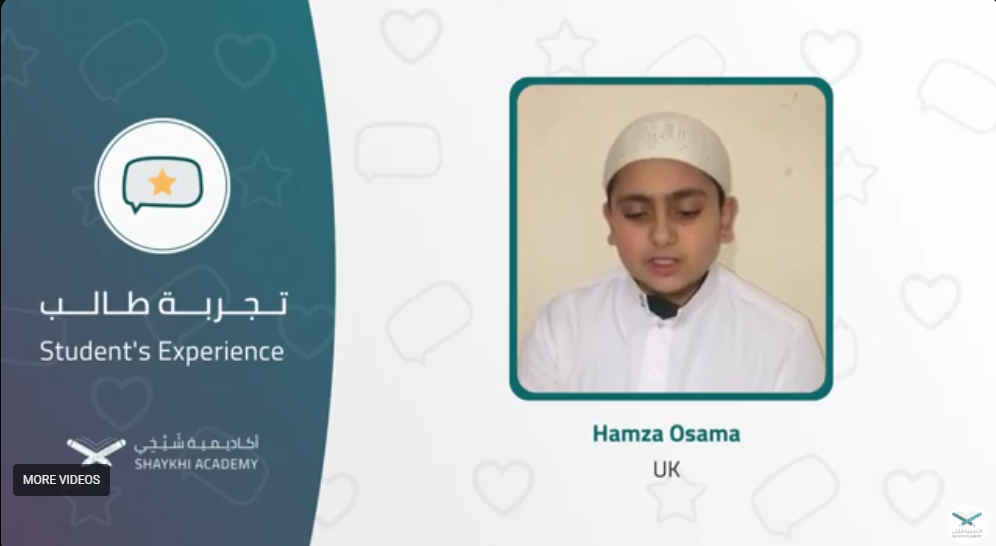
I took a course at Shaykhi Academy, and my name is Hamza Osama from England. During my time there, I learned the Arabic alphabet and Tajweed rules. I have also successfully memorized approximately two Juz of the Quran. My teacher was the best, and I feel I benefited a lot from him. I would advise anyone who wants to learn the Arabic language, Tajweed rules, or the Quran to join Shaykhi Academy.
I’m Yahia Sarhan, I’m 15 years old and I’m from Canada. I’ve been a student at Shaykhi Academy since 2019, so about three or four years now. It’s been a great learning opportunity for me and I’ve learned a lot about Islamic studies, the Quran, and Arabic reading. I’d definitely recommend it to anyone who’s trying to learn.
Develop theological competency and textual analysis skills under qualified instructors who connect classical scholarship to contemporary Canadian Muslim life.
The Canadian Quran Academy answers common questions from Brampton residents considering structured Islamic education through qualified instructors.