The Canadian Quran Academy’s Islamic studies classes in Scarborough teach Aqeedah, Tafsir basics, Islamic Fiqh fundamentals, and prophetic traditions through structured lessons. Students progress from foundational Islamic terminology to advanced Quranic interpretation techniques. Classes address Fiqh principles, Hadith analysis, and Seerah narratives with linguistic precision.
Scarborough’s multicultural community includes thousands of Muslim families seeking authentic Islamic education rooted in classical scholarship. These classes connect second-generation Canadians to their Islamic heritage while building foundational knowledge in Aqeedah needed for a deep understanding of Islamic beliefs. Students gain religious knowledge applicable to Canadian Muslim life—from understanding prayer rulings to navigating interfaith conversations.
More Details Pricing Testimonials
The Canadian Quran Academy’s Islamic studies classes in Scarborough guide students through Quranic sciences, Islamic jurisprudence, Hadith methodology, and prophetic biography. Lessons cover Aqeedah foundations, Fiqh rulings for worship and transactions, and Tafsir principles for Quranic comprehension. Students learn classical Arabic grammar structures that unlock Islamic texts, not just conversational phrases.
Classes dissect Quranic verses using morphological analysis, explore Hadith authenticity grading, and examine juristic reasoning in Hanafi, Maliki, Shafi’i, and Hanbali schools. Students read primary sources—not summaries. They parse Arabic verb conjugations, decode Quranic syntax, and apply textual evidence to contemporary questions facing Canadian Muslims daily.
The Canadian Quran Academy organizes Islamic studies classes in Scarborough around four progressive competencies: Quranic Arabic linguistics, Hadith sciences, Islamic jurisprudence, and Tafsir methodology.
Students learn the fundamental principles of Islamic belief, starting with the core tenets of Tawheed, Prophethood, and the Articles of Faith. Lessons progress through analysis of doctrinal concepts—understanding key terms, their meanings, and how they relate to each other in classical Aqeedah texts. Students explore and discuss concepts independently, identifying connections and deepening their comprehension of Islamic theology. Classes build direct understanding and critical thinking about Aqeedah without relying on external transliterations or simplified explanations.
Students learn Hadith classification systems—Sahih, Hasan, Daif—and narrator reliability assessment. Lessons cover chain transmission analysis, biographical evaluation of transmitters, and manuscript comparison techniques. Students examine famous Hadith collections—Bukhari, Muslim, Abu Dawood—and understand authentication debates. They identify weak narrations circulating online and apply verification principles rigorously.
Students explore Usul al-Fiqh—the methodology behind Islamic legal reasoning. Lessons address primary sources (Quran, Sunnah, Ijma, Qiyas) and their hierarchical application. Students analyze practical rulings on worship, contracts, family law, and financial transactions. Classes compare madhab differences, explaining why scholars reach varied conclusions from identical texts using distinct interpretive principles.
Students learn classical Tafsir approaches—linguistic analysis, historical context, juristic implications, and thematic coherence. Lessons cover major commentaries—Tabari, Ibn Kathir, Qurtubi—and their interpretive frameworks. Students examine ayat through multiple lenses: grammatical structure, prophetic explanation, companion understanding, and scholarly consensus. They avoid isolated verse misinterpretation through contextual Quranic reading skills.

Outcomes
Students engage directly with classical Aqeedah texts, exploring core Islamic doctrines such as Tawheed, Prophethood, and the Pillars of Faith. They analyze the relationships between key concepts and interpret meanings without relying on English summaries or simplified explanations. This approach strengthens their ability to think critically about Islamic theology, turning study from passive reading into active comprehension of foundational beliefs.
Students evaluate Hadith authenticity independently, assessing narrator chains and identifying fabricated reports. They distinguish between Sahih collections and weaker compilations. Students recognize common authentication errors in online Islamic content. They apply Hadith sciences rigorously, avoiding blind acceptance of circulated narrations. This skill protects against misinformation prevalent in unverified social media Islamic posts.
Students navigate contemporary Fiqh questions facing Canadian Muslims—mortgage alternatives, workplace prayer accommodations, halal investing, and family law intersections. They understand juristic reasoning behind rulings, not just memorized verdicts. Students compare madhab positions intelligently, recognizing legitimate scholarly differences. Their Fiqh knowledge addresses real situations: employment contracts, inheritance distribution, divorce proceedings, and charitable giving under Canadian tax law.
Students interpret Quranic verses through classical Tafsir frameworks, avoiding isolated proof-texting. They cross-reference ayat, examine Hadith explanations, and understand revelation circumstances. Students identify thematic connections across Surahs. Their Tafsir comprehension prevents verse misapplication—quoting war context verses for personal disputes, or specific rulings as universal commands. Contextual Quranic reading replaces superficial verse quotation habits.
Students explore the events and teachings from the Prophet Muhammad’s (PBUH) life, examining the historical context and connections between key incidents. They analyze narratives critically, identifying lessons and patterns in the actions and decisions of the Prophet. This approach allows students to understand the significance of events beyond surface-level storytelling, appreciating moral, social, and leadership principles embedded in the Sira. Students gain skills to study Islamic history thoughtfully, linking past events to practical understanding today.
Students evaluate conflicting scholarly opinions using textual evidence, not emotional preference. They assess argument strength, identify logical fallacies, and distinguish between established consensus and individual interpretations. Students question claims requiring verification—citing sources, checking authenticity, and examining context. Their critical Islamic studies training prevents blind following. They engage scholarship respectfully while maintaining intellectual rigor and evidence-based reasoning.
Why Choose us?
The Canadian Quran Academy’s instructors hold Ijazah certifications and formal Islamic studies degrees, combining traditional scholarship with modern pedagogy while addressing Canadian Muslim issues like workplace halal compliance and interfaith interaction.
The Canadian Quran Academy teaches Quranic Arabic through morphology and syntax, guiding students from basic grammatical forms to advanced structures, enabling direct reading of classical Tafsir and Islamic scholarship in Arabic.
The Canadian Quran Academy delivers live Islamic studies classes in Scarborough with real-time interaction, allowing questions, discussions, and immediate correction, while recorded sessions support review of complex jurisprudential explanations.
The Canadian Quran Academy contextualizes Islamic rulings for Scarborough Muslims, addressing halal investments, estate planning under Canadian law, and workplace accommodations, ensuring Islam is practiced meaningfully within Canadian daily life.
The Canadian Quran Academy offers structured Islamic studies classes in Scarborough from beginner Aqeedah to advanced Usul al-Fiqh, ensuring each level builds systematically and prevents knowledge gaps or conceptual confusion.
The Canadian Quran Academy provides evening and weekend Islamic studies classes in Scarborough, enabling professionals, students, and parents to balance Islamic learning with work, university commitments, and family responsibilities.
The Canadian Quran Academy trains Scarborough students to engage Quran, Hadith, and Fiqh texts directly, developing primary source literacy that builds scholarly independence and reduces reliance on secondary summaries.
Areas we serve in Canada
The Canadian Quran Academy serves students across Toronto, Scarborough, Vancouver, Montreal, Calgary, Ottawa, and globally through online Islamic studies classes for international learners.
Related Courses
The Canadian Quran Academy teaches Quranic Arabic, Modern Standard Arabic, conversational Arabic, Tajweed, Hifz, and Noorani Qaida across beginner to advanced levels for diverse learners.
The Canadian Quran Academy's Arabic classes in Scarborough deliver practical Arabic language skills through qualified native instructors. Lessons cover Modern Standard Arabic grammar, functional vocabulary acquisition, conversational fluency development, and script literacy from Alif to Yaa—structured for measurable progress across reading, writing, listening, and speaking competencies.
Explore Course
The Canadian Quran Academy delivers Quran classes in Scarborough designed for learners who need structured recitation training, Tajweed precision, and Hifz support. Classes cover Noorani Qaida foundations, Makharij articulation, Qalqalah application, vowel elongation rules, and memorization techniques rooted in classical methodology.
Explore Course
The Canadian Quran Academy's Hifz Quran in Brampton program trains students to memorize the Quran through daily repetition, verse-by-verse progression, and structured revision cycles. Students begin with short surahs, then advance through longer passages using proven retention techniques tested across decades of Hifz pedagogy.
Explore CourseThe Canadian Quran Academy’s Islamic studies classes in Scarborough start with foundational Aqeedah, Arabic grammar, and Hadith sciences for new students today.
Testimonials
The Canadian Quran Academy's graduates lead community Islamic education, pursue advanced Islamic studies degrees, and apply Fiqh knowledge professionally across Canada and internationally.
Alhumdulilah my son 7yr old loves his Quran classes. Sheikh Nour Eddin Mohmoud is very interactive and makes it very interesting for my son. MashaAllah my son has progressed in his Tajweed learning, applying and memorizing. After so many teachers finally found Sheikh Nour who understands and communicate with parents and listens as to what exactly one is looking for their child. I really recommend this institute and sheikh Nour . InshaAllah I want my other son to start with Sheikh Nour as well. Hope this helps for anyone who is looking to get their kids to learn online.
Alhamdulillah this is a great place to learn Quran, Islamic Studies, and Arabic. I took these three classes and gained a lot. They teach through zoom in one on one sessions where you decide the time and day. I used whatsapp as the communication and the coordinators were really responsive. For Quran, we would read the arabic together and then learn the tafsir. After that I would memorize the surah or a portion for the next class. For Arabic, it was a focus on vocabulary and conjugations of verbs. For Islamic studies you went through a text together. The teachers are really nice and you can ask anything. I found it enjoyable learning about a different culture as I was raised in America. Give it a try!
Real transformations from students who mastered the Quran with our courses
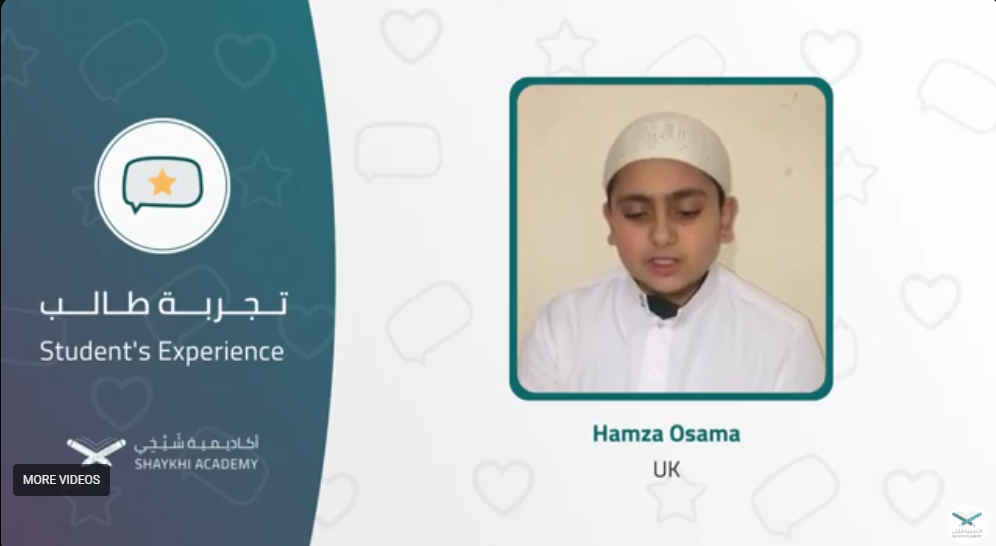
I took a course at Shaykhi Academy, and my name is Hamza Osama from England. During my time there, I learned the Arabic alphabet and Tajweed rules. I have also successfully memorized approximately two Juz of the Quran. My teacher was the best, and I feel I benefited a lot from him. I would advise anyone who wants to learn the Arabic language, Tajweed rules, or the Quran to join Shaykhi Academy.
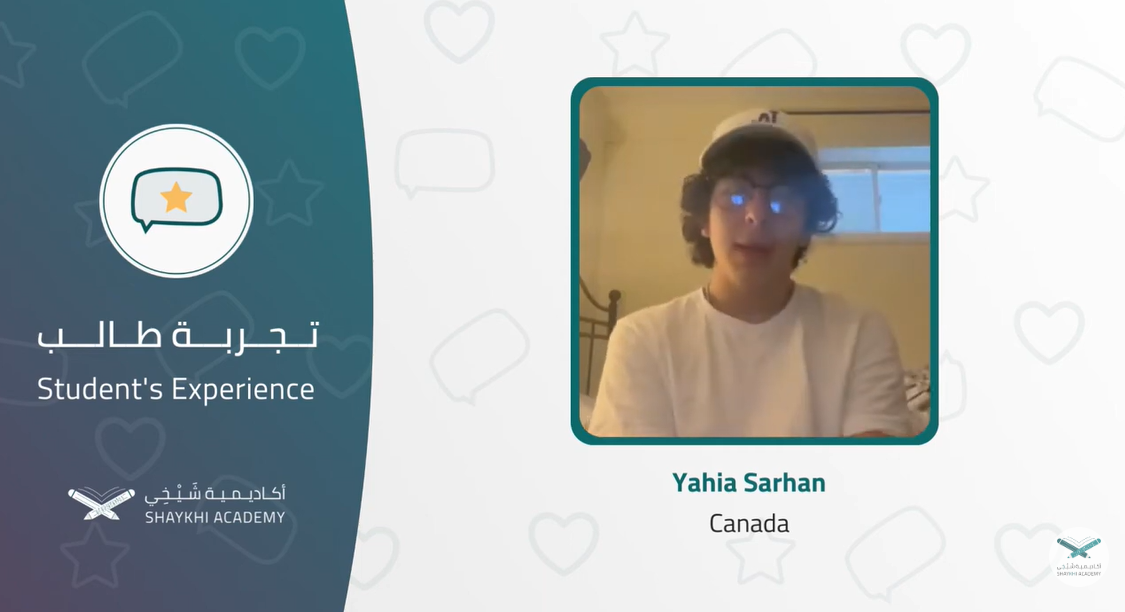
I’m Yahia Sarhan, I’m 15 years old and I’m from Canada. I’ve been a student at Shaykhi Academy since 2019, so about three or four years now. It’s been a great learning opportunity for me and I’ve learned a lot about Islamic studies, the Quran, and Arabic reading. I’d definitely recommend it to anyone who’s trying to learn.
The Canadian Quran Academy accepts new students for Islamic studies classes in Scarborough immediately. Enrollment remains open for current term registration.
Common questions about The Canadian Quran Academy's Islamic studies classes in Scarborough addressing curriculum depth, Arabic requirements, scheduling flexibility, and instructor qualifications.