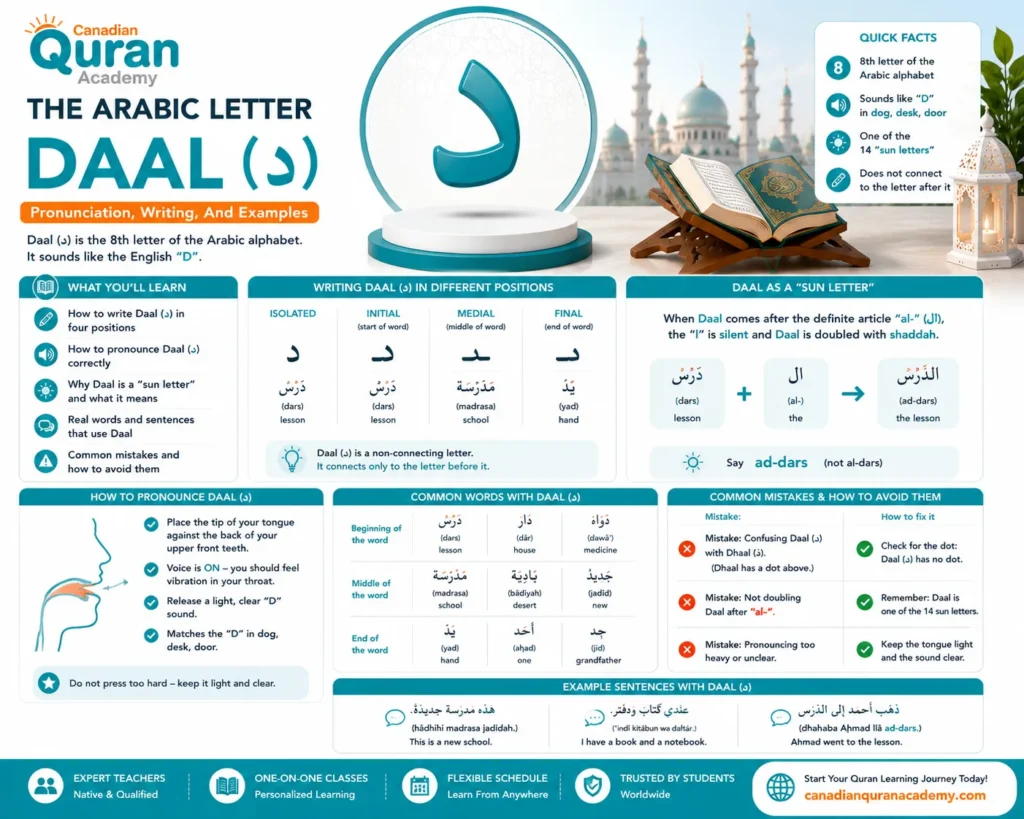
 Arabic
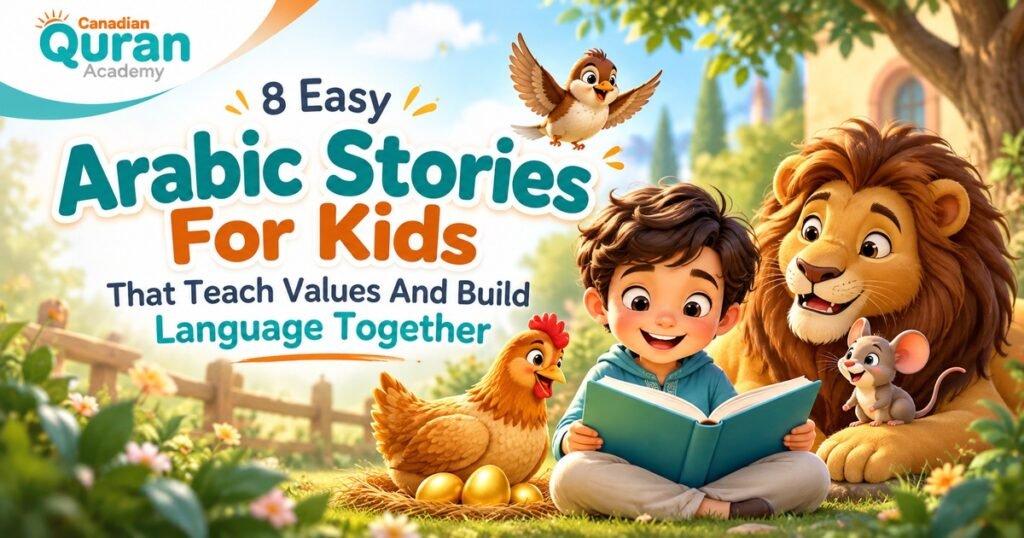
Arabic does not have to feel like homework. For children growing up in Canada, easy Arabic stories for kids offer the most natural path into the language; one that runs through imagination, not drills.
When a child follows a lion through a forest or watches a shepherd face the consequences of dishonesty, Arabic words attach to real meaning. That connection lasts far longer than any vocabulary list could.
This article presents eight carefully chosen stories, explains the language and moral value each one carries, and gives Canadian parents practical guidance for using them consistently at home.
The Benefits Of Easy Arabic Stories For Kids
The first four stories from 1 – 4 form an ideal starting point for young Arabic learners. They use short sentences, repeating vocabulary, and clear moral endings that children aged 4 to 9 can follow without difficulty.
Each entry below identifies the core Arabic words the story naturally introduces, so parents can pause the reading and highlight those words as the narrative unfolds.
The second four stories from 5 – 8 introduce slightly richer vocabulary and more nuanced moral themes. They suit children with some prior Arabic exposure, though parents can still read them aloud and discuss them in English with younger children.
Each story carries a moral concept that Arabic Islamic literature has always placed at the center of children’s character education, making them ideal for Muslim families raising children in Canada.

1. The Lion And The Mouse Teaches Kindness Through An Unexpected Friendship
A sleeping lion wakes when a small mouse runs across his body. He grabs the mouse, ready to eat him, but releases him after the mouse promises to repay the kindness one day.
Days later, the lion falls into a hunter’s net and cannot escape. The mouse hears his roar, chews through every rope, and sets him free. Key Arabic words: أسد (lion), فأر (mouse), أطلق (released), أنقذ (rescued).
This story connects naturally with Quranic verses on helping the needy in Arabic, which parents can explore alongside the narrative to show children how the same values appear in the Quran.
Start Your Kindergartener’s Arabic Learning with The Canadian Quran Academy Today

2. The Lying Shepherd Demonstrates Why Honesty Protects The Community
A bored shepherd cries “Wolf!” twice as a prank. Villagers rush to help both times and find him laughing. When a real wolf attacks, his cries go unanswered because no one believes him anymore.
This story uses structural repetition; the same scene plays out three times with escalating consequences. That predictable pattern makes it one of the best easy Arabic stories for kids who are just beginning to follow longer narrative arcs.
Vocabulary like ذئب (wolf), أغنام (sheep), and صرخ (shouted) repeats naturally across all three scenes, reinforcing the words without any drilling required.

3. The Golden Hen Warns Young Readers Against The Dangers Of Greed
A farmer owns a hen that lays one golden egg per day. Impatient with the slow pace of his wealth, he slaughters her to access all the eggs at once. He finds nothing inside and loses his income permanently.
Practical vocabulary appears naturally here: دجاجة (hen), بيضة (egg), ذهب (gold), خسر (lost). These words appear in everyday Arabic and in Quranic commerce contexts, giving children vocabulary with broad and lasting application.
The moral on greed maps directly to real-life conversations, making this story genuinely valuable for both character development and early Arabic vocabulary building.
Read also: 6 Fun Arabic Games For Kids That Make Letters, Words, And Sentences Stick
4. The Elephant And The Ant Proves That Humility Is Stronger Than Pride
A boastful elephant named Falhoum mocks a small ant for her size. When the elephant falls into a muddy pit, the ant rallies her colony to rescue him one grain of sand at a time.
The story uses contrasting vocabulary pairs: كبير (big), صغير (small), قوي (strong), تعاون (teamwork). Teaching adjectives through dramatic contrast is one of the most effective techniques in Arabic early literacy programs.
Falhoum’s transformation from arrogance to gratitude gives parents a natural opening to discuss تواضع (humility) with their children in a way that genuinely sticks.
For children aged 6 to 12 who are ready for a full structured curriculum, the Arabic Elementary School program at Canadian Quran Academy builds a complete reading and writing foundation using exactly this kind of foundational vocabulary.
Live Class in Action
Watch how our instructors interact with students in real-time, focusing on interactive methods.
Start Your Quranic Journey in Canada
Join our vibrant community and learn with expert tutors through our flexible online platform.
Claim Your Free Trial5. The Rabbit And The Turtle Shows That Persistence Always Outlasts Speed
A fast rabbit challenges a slow turtle to a race, certain of an easy victory. The rabbit naps midway, confident in his lead. The turtle crosses the finish line first through steady, unbroken effort.
Temporal and descriptive vocabulary appears naturally: سريع (fast), بطيء (slow), استمر (continued), فاز (won). Contrasting adjective pairs like these are among the most effective vocabulary structures in Arabic children’s literacy.
The story reinforces اجتهاد (diligence), a value woven through Islamic educational tradition and one that Canadian Muslim parents find especially meaningful for motivating children through academic challenges.
6. The Brave Sparrow Reveals That Courage Grows Through Helping Others
A small sparrow named Zahr fears flying far from his nest. When a storm sends flowers into a river and traps his butterfly friends, Zahr overcomes his fear and rescues them single-handedly.
Emotional vocabulary makes this story memorable: خائف (afraid), شجاع (brave), أنقذ (rescued), طار (flew). These emotionally charged words appear across Islamic heroic narratives and accounts of prophetic courage in the Quran.
This story works best for children aged 4 to 7. Parents of children in that age group might explore Arabic Lessons for Kindergarten at Canadian Quran Academy, where story-connected vocabulary is built into a structured, age-appropriate setting.

7. The Wise King And The Grateful Farmer Reveals The True Source Of Happiness
A powerful king feels empty despite his wealth and travels in disguise to find the secret of happiness. He discovers a simple farmer working contentedly in his field, owning very little but grateful for all of it.
Core vocabulary includes رضا (contentment), شكر (gratitude), سعادة (happiness), and قناعة (sufficiency). These are not only essential Arabic words; they are Quranic concepts parents can deepen with Quranic verses on shukr in Arabic.
This story suits children aged 7 and above who can grasp the idea that external wealth and internal contentment are not the same thing.
Start Classical Arabic Training That Builds Real Textual Analysis Skills

8. The Two Friends And The Bear Shows That True Friendship Proves Itself In Difficulty
Two friends walk through a forest. A bear appears. One friend climbs a tree and abandons the other. The abandoned friend lies still, plays dead, and survives. When asked what the bear whispered, he answered: “Stay away from those who leave you in danger.”
Vocabulary includes صديق (friend), خطر (danger), وفاء (loyalty), and نجا (survived). The story uses natural dialogue, making it ideal for parent-child reading aloud where each person voices a different character.
Canadian Quran Academy creates a learning environment built on exactly the values these stories carry. Qualified instructors guide children through Arabic vocabulary, reading, and conversation in live, interactive sessions from anywhere in Canada.
The table below summarizes all eight stories by vocabulary focus, moral lesson, and recommended age group, giving you a practical reference for planning your family’s reading sessions:
| Story | Core Arabic Words | Moral Lesson | Best Age |
| The Lion And The Mouse | أسد, فأر, أطلق, أنقذ | Kindness always returns | 4 to 6 |
| The Lying Shepherd | ذئب, أغنام, صرخ, كذب | Honesty protects trust | 5 to 8 |
| The Golden Hen | دجاجة, بيضة, ذهب, خسر | Greed leads to loss | 6 to 9 |
| The Elephant And The Ant | كبير, صغير, قوي, تعاون | Humility opens doors | 5 to 8 |
| The Rabbit And The Turtle | سريع, بطيء, استمر, فاز | Persistence wins | 6 to 9 |
| The Brave Sparrow | خائف, شجاع, أنقذ, طار | Courage grows through action | 4 to 7 |
| The Wise King And The Farmer | رضا, شكر, سعادة, قناعة | Gratitude is true wealth | 7 to 10 |
| The Two Friends And The Bear | صديق, خطر, وفاء, نجا | True friendship shows in hardship | 7 to 11 |
Why Easy Arabic Stories For Kids Work Better Than Traditional Drills?
Learning Arabic through stories is not simply a gentler option; it is a neurologically smarter one. Words absorbed inside a narrative attach to emotion, character, and consequence, creating memory pathways that rote repetition cannot match.
For Canadian Muslim families raising children in English-dominant environments, that advantage is especially relevant. Story time becomes a small, consistent island of natural Arabic immersion requiring no special tools or formal training.
Understanding why learning Arabic in Canada matters beyond religious duty helps parents see each story session as a genuine skill-building investment, not just bedtime entertainment.
A. Stories Create Natural Context For Arabic Vocabulary
A child who hears “أسد” inside a dramatic forest escape remembers the word. A child who copies it onto a worksheet ten times probably will not.
Narrative context binds vocabulary to vivid images, real stakes, and memorable characters. The brain stores words surrounded by these anchors differently than isolated list entries on a page.
That is the core strength of easy Arabic stories for kids; words become experiences before they become definitions, making them far easier to recall days and weeks later.
Repeated exposure to short, simple Arabic sentences trains the ear to recognize Arabic patterns as natural and expected. Children who grow up hearing Arabic stories consistently show faster grammar progress when formal classes begin.
Exploring what the benefits of learning Arabic in Canada include, from Quranic access to cognitive flexibility, helps parents frame early story exposure as a long-term investment.
B. Moral Themes Keep Young Readers Emotionally Invested Until The End
Arabic children’s stories almost always carry a clear moral lesson. That lesson gives children an emotional reason to follow the story through, which improves both comprehension and vocabulary retention.
A child who genuinely wants to know whether the honest shepherd survives or the greedy farmer loses his hen will absorb surrounding Arabic vocabulary without realizing it.
This emotional investment explains why the classic stories below have survived for centuries and still appear in Arabic classrooms and family homes across Canada and the Arab world alike.
Experience Our Classrooms
Don’t just take our word for it—take a look inside! Watch the videos below to experience our engaging teaching methods and vibrant online classrooms firsthand.
Start Your Quranic Journey in Canada
Join our vibrant community and learn with expert tutors through our flexible online platform.
Claim Your Free TrialStart Your Child’s Arabic Journey With Canadian Quran Academy Today
Your child does not need a classroom to begin building real Arabic. Stories open the door; structured learning is what takes them through it into lasting fluency.
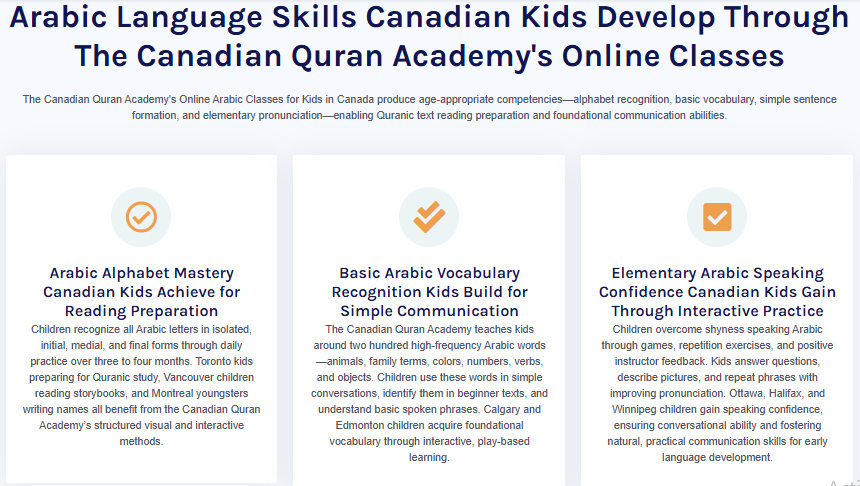
Canadian Quran Academy offers Online Arabic Classes for Kids and Quran classes for kids taught by native-speaking instructors who work with children across Canada.
Every session is live, interactive, and grounded in the same values these eight stories teach.
Our Arabic Courses:
- Online Arabic Course
- Advanced Arabic Course
- Arabic Grammar Course
- Modern Standard Arabic Course
- Arabic Conversation / Speaking Course
- Intensive Arabic Course
- Arabic Classes for Adults
- Arabic Classes for Ladies
- Fusha Arabic Course
Start the free trial lesson and let Your Child begins his Arabic Learning Journey With Age-Appropriate Instruction
Conclusion
Easy Arabic stories for kids are not a detour around language learning; they are its most effective starting point.
Each of the eight stories above introduces real vocabulary, real grammar patterns, and real Islamic values in a format children genuinely want to follow through to the end.
For Canadian Muslim families, that carries special weight. The words children absorb through these stories, words like شكر, وفاء, and شجاعة, are the same words woven through the Quran and the Arabic their children will one day read independently.
Start with one story tonight. Read it aloud. Pause on the Arabic words. Let the lesson land naturally. That small, consistent habit builds the Arabic foundation that no worksheet ever could.
Frequently Asked Questions
What Age Is Best To Start Reading Easy Arabic Stories For Kids?
Children as young as 3 to 4 benefit from hearing simple Arabic stories read aloud. Active vocabulary work and formal reading typically become most productive from age 5 onward.
How Many Arabic Words Should A Child Focus On Per Story?
Focus on 3 to 5 core vocabulary words per session. Introducing more than that reduces retention. Revisiting the same words across multiple sessions builds lasting fluency over time.
Can Easy Arabic Stories For Kids Replace A Formal Arabic Course?
Stories are an excellent supplement but not a full replacement. They build vocabulary and listening comprehension; structured courses develop reading, writing, and grammar in a sequenced, progressive curriculum. Together they produce the strongest outcomes.
How Do I Use An Arabic Story If I Do Not Speak Arabic Myself?
Read from a transliterated version or an audio recording, pause at key vocabulary words, repeat them with your child, and discuss the moral lesson in English. Many bilingual Arabic children’s books are designed for exactly this situation.
Are These Stories Appropriate For Canadian Muslim Families?
Yes. All eight stories carry moral lessons aligned with Islamic values; honesty, gratitude, humility, courage, and loyalty sit at the center of Arabic literary tradition and Islamic character education.
How Often Should Children Hear Easy Arabic Stories At Home?
Daily sessions of 10 to 15 minutes outperform occasional long ones. Consistency matters more than session length, especially for children under age 8, where regular repetition drives language acquisition.





Leave a Reply