 Quran
Quran
Gratitude is not a feeling that comes and goes with circumstances. In the Quran, it is a command, a choice, and a defining trait of those who truly know Allah.
The Arabic word Shukr (شُكْر) comes from the root ش-ك-ر (Sheen-Kaf-Ra), which carries the meaning of recognizing a gift and acknowledging its giver. Its derivatives appear dozens of times across the Quran — a frequency that tells you everything about how central this quality is to a believer’s character.
Yet most Muslims know they should be grateful without ever sitting with the verses that define what true Shukr actually looks like — what it demands of the heart, the tongue, and the limbs, and what Allah has promised in return.
This guide presents ten of the most powerful Quranic verses on Shukr in Arabic, complete with full tashkeel, transliteration, surah name, verse number, and a direct link to each verse — so you can read them, understand them, and carry them with you.
A Quranic Verse on How Thanking Allah Brings More Blessings
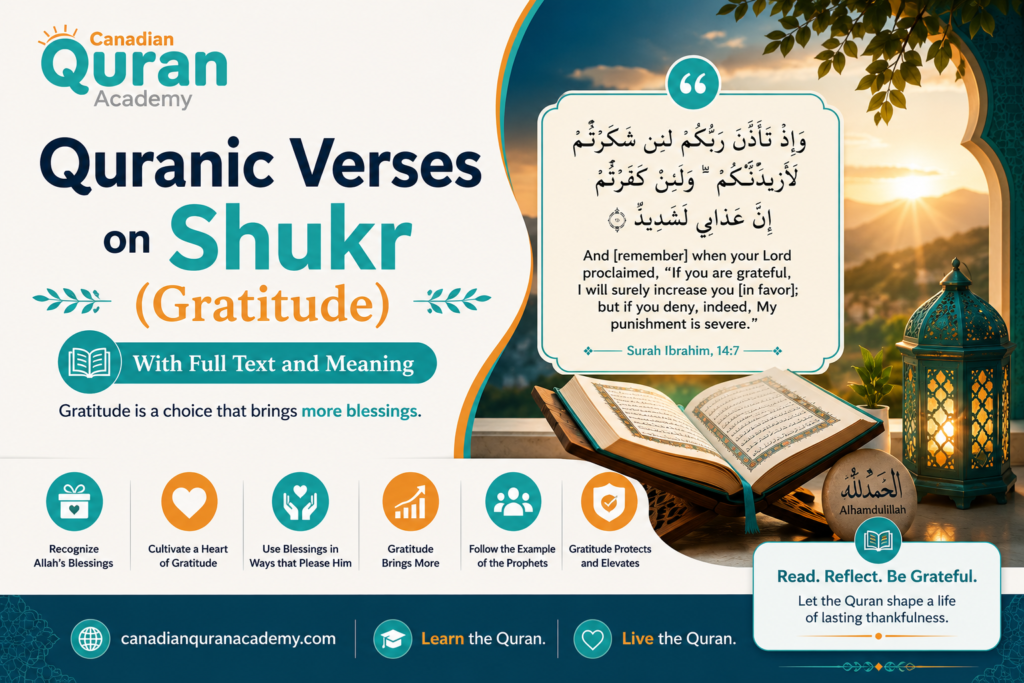
One of the most direct verses on Shukr comes from Surah Ibrahim. Here, Allah does not suggest gratitude — He makes a binding promise tied to it.
وَإِذْ تَأَذَّنَ رَبُّكُمْ لَئِن شَكَرْتُمْ لَأَزِيدَنَّكُمْ ۖ وَلَئِن كَفَرْتُمْ إِنَّ عَذَابِى لَشَدِيدٌ
Wa idh ta’adhdhana rabbukum la’in shakartum la’azīdannakum wa la’in kafartum inna ‘adhābī lashadīd.
“And [remember] when your Lord proclaimed, ‘If you are grateful, I will surely increase you [in favor]; but if you deny, indeed, My punishment is severe.'” — Surah Ibrahim, 14:7
Reflect on the certainty embedded in Allah’s words: لَأَزِيدَنَّكُمْ (la’azīdannakum) — “I will surely increase you.” The lam and the emphatic nun together make this an unqualified divine promise. And the increase is not limited to wealth. Scholars of tafsir explain it encompasses barakah, peace of heart, strength of faith, and closeness to Allah.
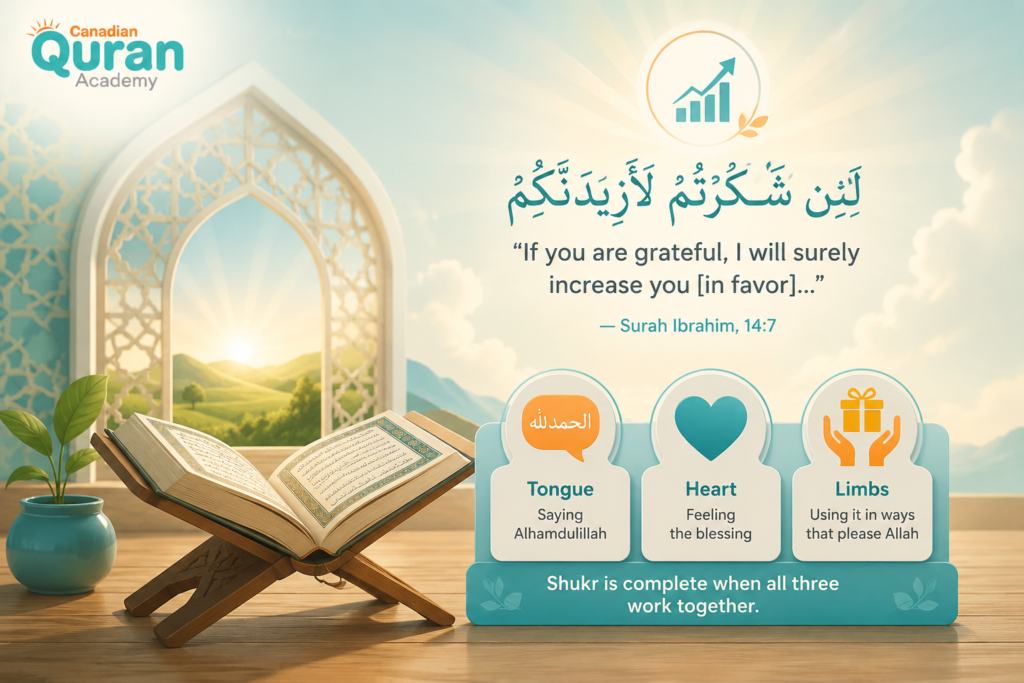
The verse also defines Shukr in its fullest form: gratitude of the tongue (saying Alhamdulillah), of the heart (genuinely feeling the blessing), and of the limbs (using what Allah gave in ways that please Him). All three are required. Saying Alhamdulillah while misusing Allah’s blessings is an incomplete Shukr.
A Quranic Command to Worship Allah and Be Grateful
Shukr in the Quran is not merely a response to good fortune. It is placed directly alongside the highest act a human being can perform.
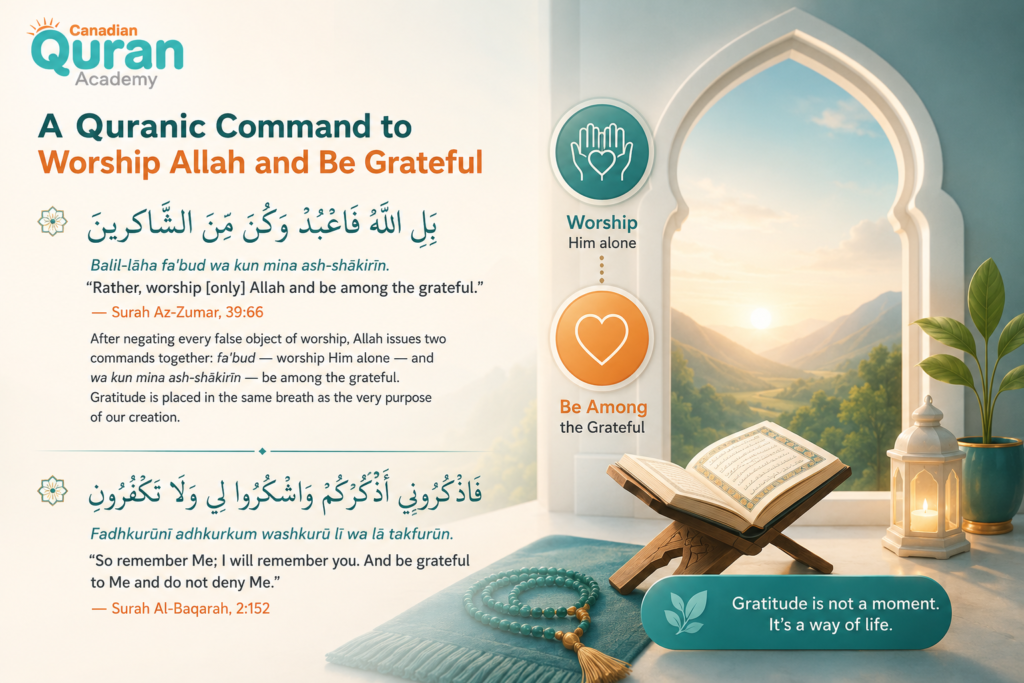
بَلِ اللَّهَ فَاعْبُدْ وَكُن مِّنَ الشَّاكِرِينَ
Balil-lāha fa’bud wa kun mina ash-shākirīn.
“Rather, worship [only] Allah and be among the grateful.” — Surah Az-Zumar, 39:66
After negating every false object of worship, Allah issues two commands together: فَاعْبُدْ (fa’bud) — worship Him alone — and وَكُن مِّنَ الشَّاكِرِينَ (wa kun mina ash-shākirīn) — be among the grateful. Gratitude is placed in the same breath as the very purpose of our creation.
Notice the phrasing: not merely “be grateful,” but be among the grateful ones — join a category of people, make it your identity. This is not a one-time act but a continuous state of character.
فَاذْكُرُونِي أَذْكُرْكُمْ وَاشْكُرُوا لِي وَلَا تَكْفُرُونِ
Fadhkurūnī adhkurkum washkurū lī wa lā takfurūn.
“So remember Me; I will remember you. And be grateful to Me and do not deny Me.” — Surah Al-Baqarah, 2:152
Dhikr (remembrance) and Shukr (gratitude) are mentioned together here — and for good reason. They feed one another. When you truly remember Allah’s power, His mercy, and His constant care, gratitude follows naturally. When gratitude fills the heart, it pulls you back to His remembrance.
The opposite of Shukr named here is not simply “ingratitude” — it is كُفْر (kufr), which in this context means covering up or denying a blessing. The same root that gives us the word for disbelief is the word for ingratitude. The linguistic connection is deliberate: treating a blessing as if it came from yourself, or as if it were owed to you, is a form of denial.If you are exploring what it means to understand the Quran at this level — word by word, command by command — Islamic Studies courses for adults offer exactly this kind of structured engagement with the text.
Join a FREE Trial Class for Islamic Studies Courses for Adults in Canada
A Quranic Thankfulness Dua from Sulaiman (AS)
The Prophets are our clearest examples of how gratitude looks in a living heart.
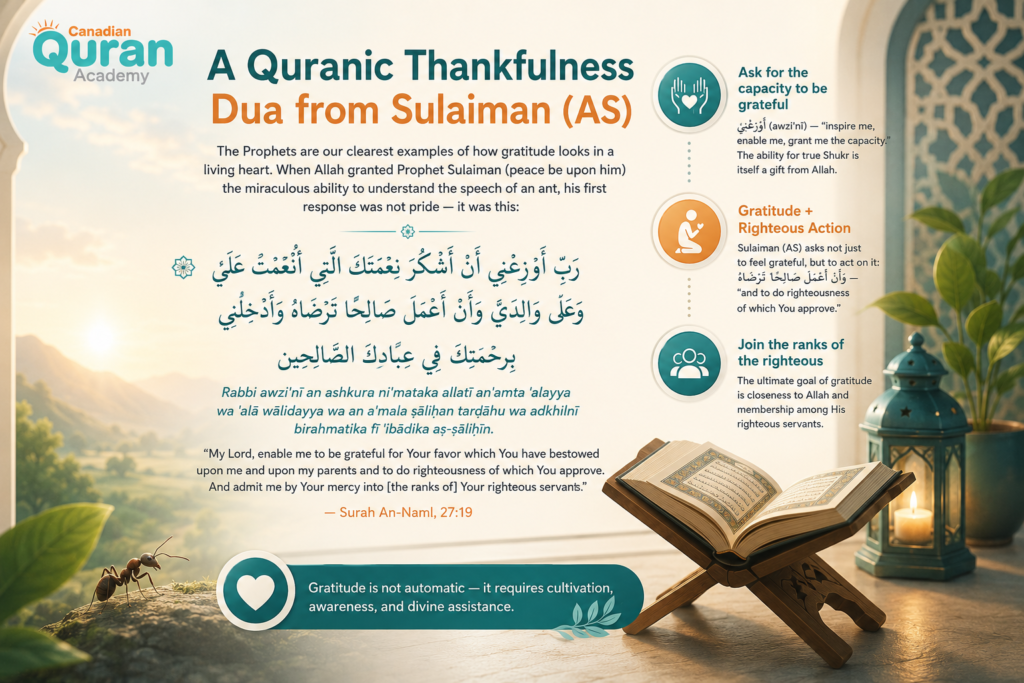
When Allah granted Prophet Sulaiman (peace be upon him) the miraculous ability to understand the speech of an ant, his first response was not pride — it was this:
رَبِّ أَوْزِعْنِي أَنْ أَشْكُرَ نِعْمَتَكَ الَّتِي أَنْعَمْتَ عَلَيَّ وَعَلَىٰ وَالِدَيَّ وَأَنْ أَعْمَلَ صَالِحًا تَرْضَاهُ وَأَدْخِلْنِي بِرَحْمَتِكَ فِي عِبَادِكَ الصَّالِحِينَ
Rabbi awzi’nī an ashkura ni’mataka allatī an’amta ‘alayya wa ‘alā wālidayya wa an a’mala ṣāliḥan tarḍāhu wa adkhilnī birahmatika fī ‘ibādika aṣ-ṣāliḥīn.
“My Lord, enable me to be grateful for Your favor which You have bestowed upon me and upon my parents and to do righteousness of which You approve. And admit me by Your mercy into [the ranks of] Your righteous servants.” — Surah An-Naml, 27:19
The key word here is أَوْزِعْنِي (awzi’nī) — “inspire me, enable me, grant me the capacity.” Sulaiman is asking Allah to give him the ability to be grateful. This is one of the deepest insights in the entire Quran on this subject: the capacity for true Shukr is itself a gift from Allah that must be asked for. Gratitude is not automatic — it requires cultivation, awareness, and divine assistance.
He then asks not just to feel grateful, but to act on it: وَأَنْ أَعْمَلَ صَالِحًا تَرْضَاهُ — “and to do righteousness of which You approve.” Shukr expressed only in words, without righteous action, is incomplete in the prophetic model.
Experience Our Classrooms
Don’t just take our word for it—take a look inside! Watch the videos below to experience our engaging teaching methods and vibrant online classrooms firsthand.
Start Your Quranic Journey in Canada
Join our vibrant community and learn with expert tutors through our flexible online platform.
Claim Your Free TrialRead More: Quran Verses About Women’s Clothing in Arabic
A Quranic Verse Stating That Shukr Is for Your Own Good
In Surah Luqman, Allah connects gratitude directly to wisdom — and then delivers one of the most clarifying statements in the Quran about who actually benefits from our thanks.
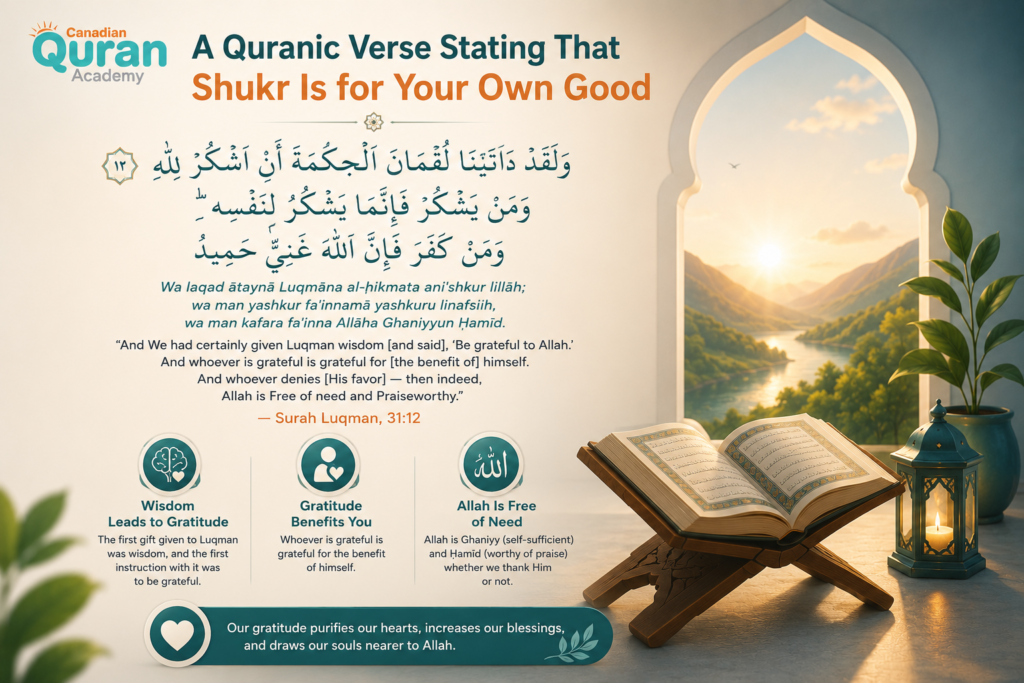
وَلَقَدْ آتَيْنَا لُقْمَانَ الْحِكْمَةَ أَنِ اشْكُرْ لِلَّهِ ۚ وَمَن يَشْكُرْ فَإِنَّمَا يَشْكُرُ لِنَفْسِهِ ۖ وَمَن كَفَرَ فَإِنَّ اللَّهَ غَنِيٌّ حَمِيدٌ
Wa laqad ātaynā Luqmāna al-ḥikmata ani’shkur lillāh; wa man yashkur fa’innamā yashkuru linafsih, wa man kafara fa’inna Allāha Ghaniyyun Ḥamīd.
“And We had certainly given Luqman wisdom [and said], ‘Be grateful to Allah.’ And whoever is grateful is grateful for [the benefit of] himself. And whoever denies [His favor] — then indeed, Allah is Free of need and Praiseworthy.” — Surah Luqman, 31:12
The first gift Allah gave Luqman was الْحِكْمَة (al-ḥikmah — wisdom), and the first instruction that came with it was: be grateful to Allah. This equation — wisdom leads to gratitude — inverts the common assumption that gratitude is an emotional response. Here it is presented as the mark of a wise mind.
Then comes the clarification: فَإِنَّمَا يَشْكُرُ لِنَفْسِهِ (fa’innamā yashkuru linafsih) — he is only grateful for the benefit of himself. Our Shukr does not add anything to Allah. He is Ghaniyy (entirely self-sufficient) and Ḥamīd (praised whether we praise Him or not). Our gratitude purifies our own hearts, increases our own blessings, and draws our own souls nearer to Him.
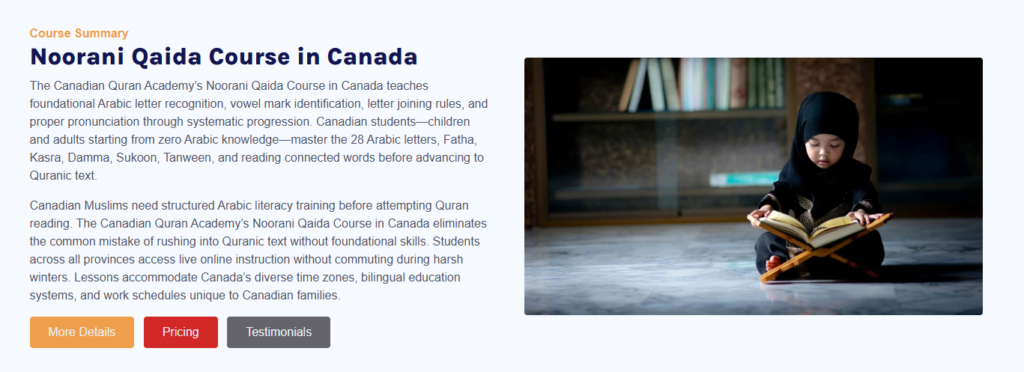
For those who want to build this awareness through a structured understanding of the Quran’s language itself, beginning with Noorani Qaida is a solid first step — reading correctly is the foundation for everything that follows.
Start Learning Noorani Qaida with a FREE Trial Class in Canada
A Quranic Verse on Thanking Allah for His Provisions
Allah does not just permit us to enjoy what He has provided — He commands it. And He connects that enjoyment directly to gratitude.
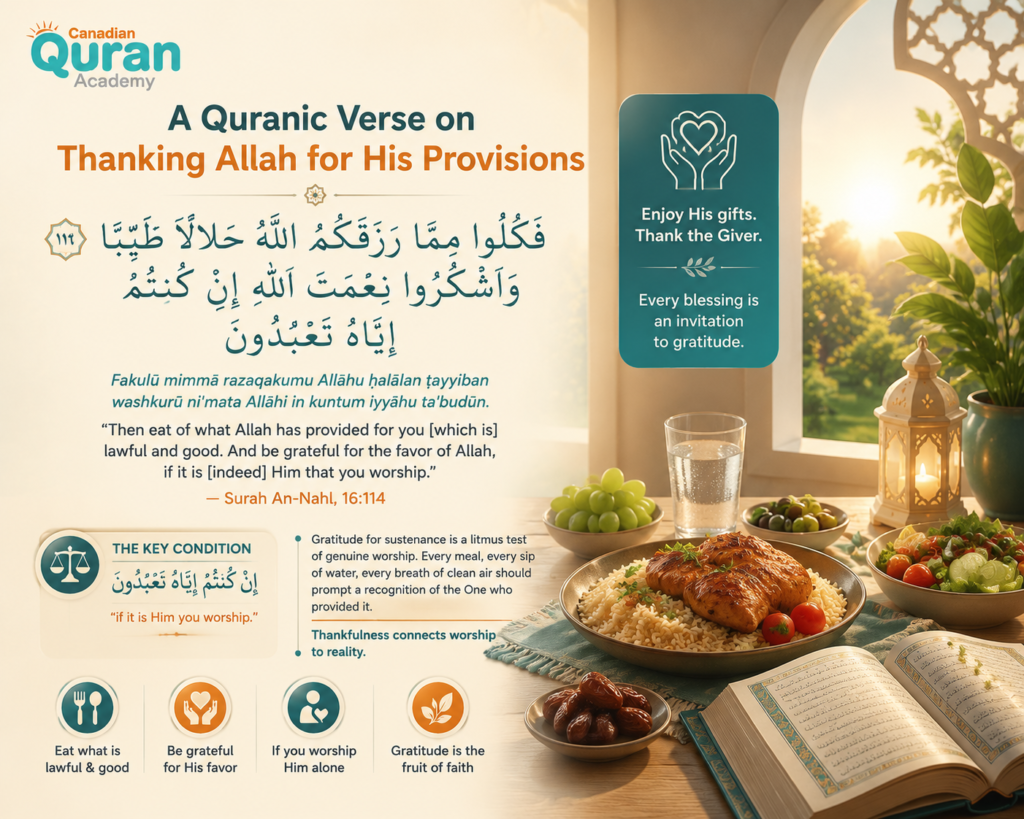
فَكُلُوا مِمَّا رَزَقَكُمُ اللَّهُ حَلَالًا طَيِّبًا وَاشْكُرُوا نِعْمَتَ اللَّهِ إِن كُنتُمْ إِيَّاهُ تَعْبُدُونَ
Fakulū mimmā razaqakumu Allāhu ḥalālan ṭayyiban washkurū ni’mata Allāhi in kuntum iyyāhu ta’budūn.
“Then eat of what Allah has provided for you [which is] lawful and good. And be grateful for the favor of Allah, if it is [indeed] Him that you worship.” — Surah An-Nahl, 16:114
The closing condition is the key: إِن كُنتُمْ إِيَّاهُ تَعْبُدُونَ — “if it is Him you worship.” Gratitude for sustenance is presented here as a litmus test of genuine worship. If Allah is truly the one you worship, then every meal, every sip of water, every breath of clean air should prompt a recognition of the One who provided it. Enjoying His gifts without acknowledging Him as their source is a disconnection between claimed worship and lived reality.
Read More: Quranic Verses on Salah in Arabic and English
A Quranic Verse on the Choice of Gratitude
The most fundamental gift Allah has given humanity is guidance itself. And having received it, every soul faces a choice.
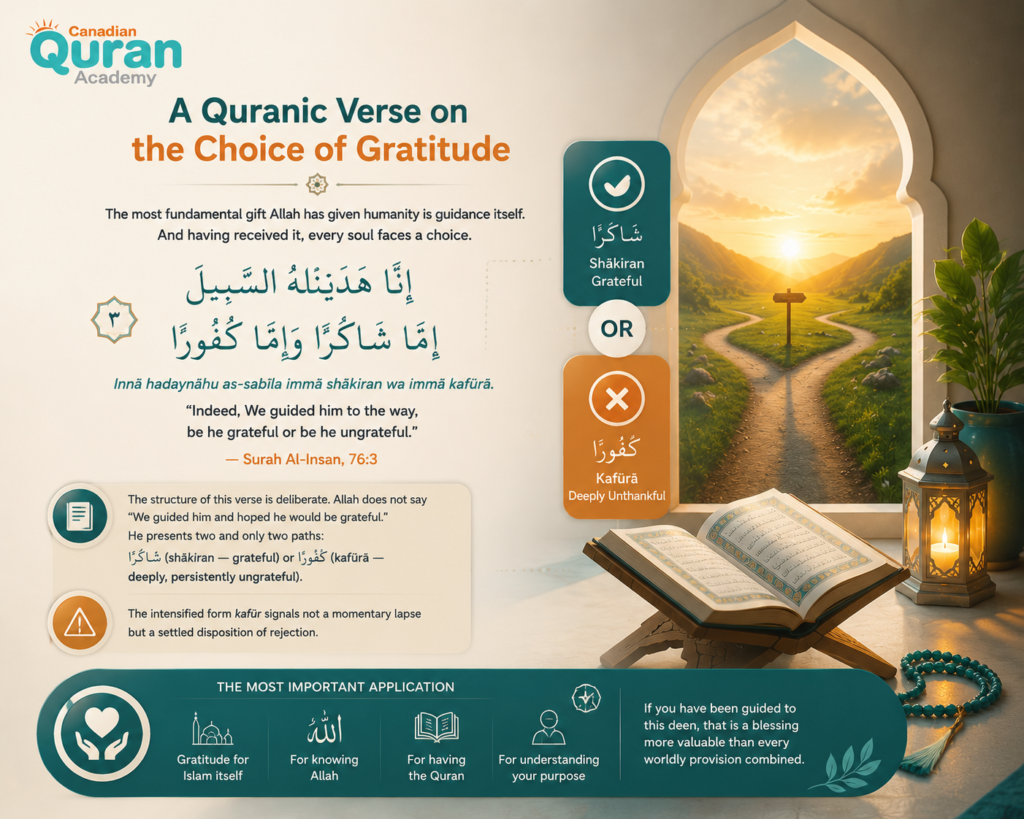
إِنَّا هَدَيْنَاهُ السَّبِيلَ إِمَّا شَاكِرًا وَإِمَّا كَفُورًا
Innā hadaynāhu as-sabīla immā shākiran wa immā kafūrā.
“Indeed, We guided him to the way, be he grateful or be he ungrateful.” — Surah Al-Insan, 76:3
The structure of this verse is deliberate. Allah does not say “We guided him and hoped he would be grateful.” He presents two and only two paths: شَاكِرًا (shākiran — grateful) or كَفُورًا (kafūrā — deeply, persistently ungrateful). The intensified form kafūr signals not a momentary lapse but a settled disposition of rejection.
The most important application: gratitude for Islam itself — for knowing Allah, for having the Quran, for understanding your purpose — is the highest form of Shukr. If you have been guided to this deen, that is a blessing more valuable than every worldly provision combined.
A Quranic Reminder to Reflect on Allah’s Blessings
Among the most quietly sobering verses in the Quran is this one from Surah Al-A’raf — a gentle rebuke about the most basic, most overlooked blessings.
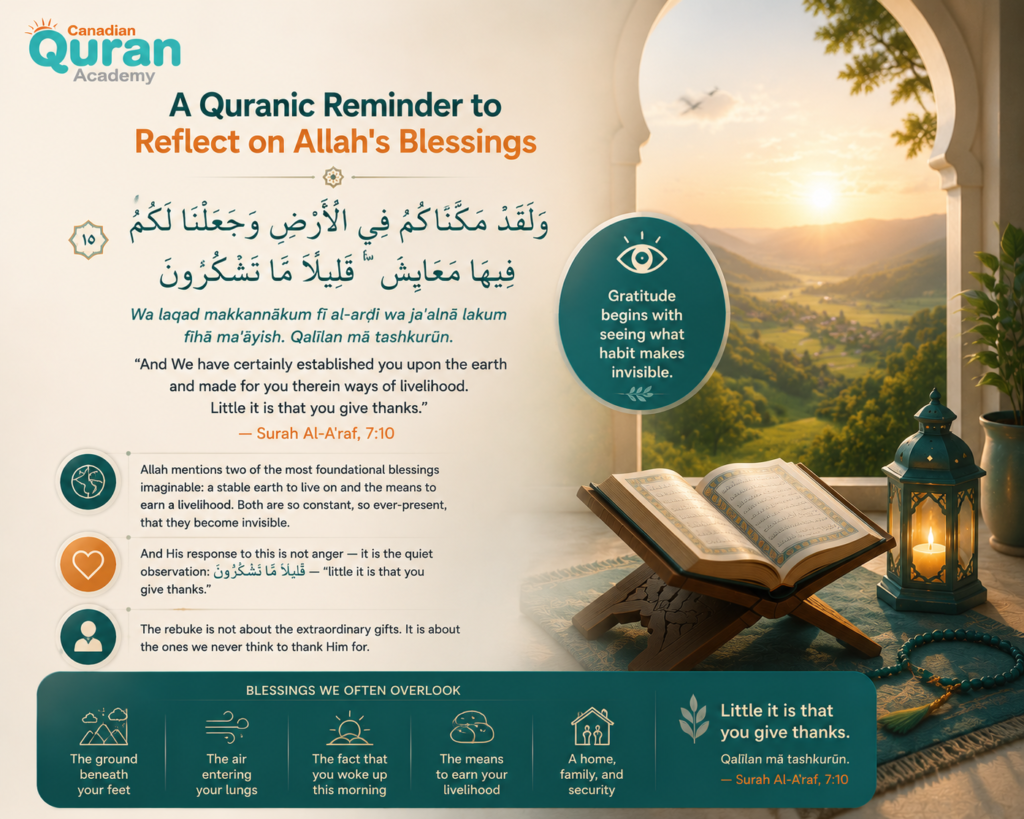
وَلَقَدْ مَكَّنَّاكُمْ فِي الْأَرْضِ وَجَعَلْنَا لَكُمْ فِيهَا مَعَايِشَ ۗ قَلِيلًا مَّا تَشْكُرُونَ
Wa laqad makkannākum fī al-arḍi wa ja’alnā lakum fīhā ma’āyish. Qalīlan mā tashkurūn.
“And We have certainly established you upon the earth and made for you therein ways of livelihood. Little it is that you give thanks.” — Surah Al-A’raf, 7:10
Allah mentions two of the most foundational blessings imaginable: a stable earth to live on and the means to earn a livelihood. Both are so constant, so ever-present, that they become invisible. And His response to this is not anger — it is the quiet observation: قَلِيلًا مَّا تَشْكُرُونَ — “little it is that you give thanks.”
The rebuke is not about the extraordinary gifts. It is about the ones we never think to thank Him for. The ground beneath your feet right now. The air entering your lungs. The fact that you woke up this morning. This verse trains the eye to see what habit makes invisible.
Read More: Quranic Verses on Patience in Arabic
A Quranic Verse on Allah’s Boundless Reward
The final verse opens a window onto one of the most beautiful of Allah’s names — and reframes the entire relationship between our deeds and His response to them.
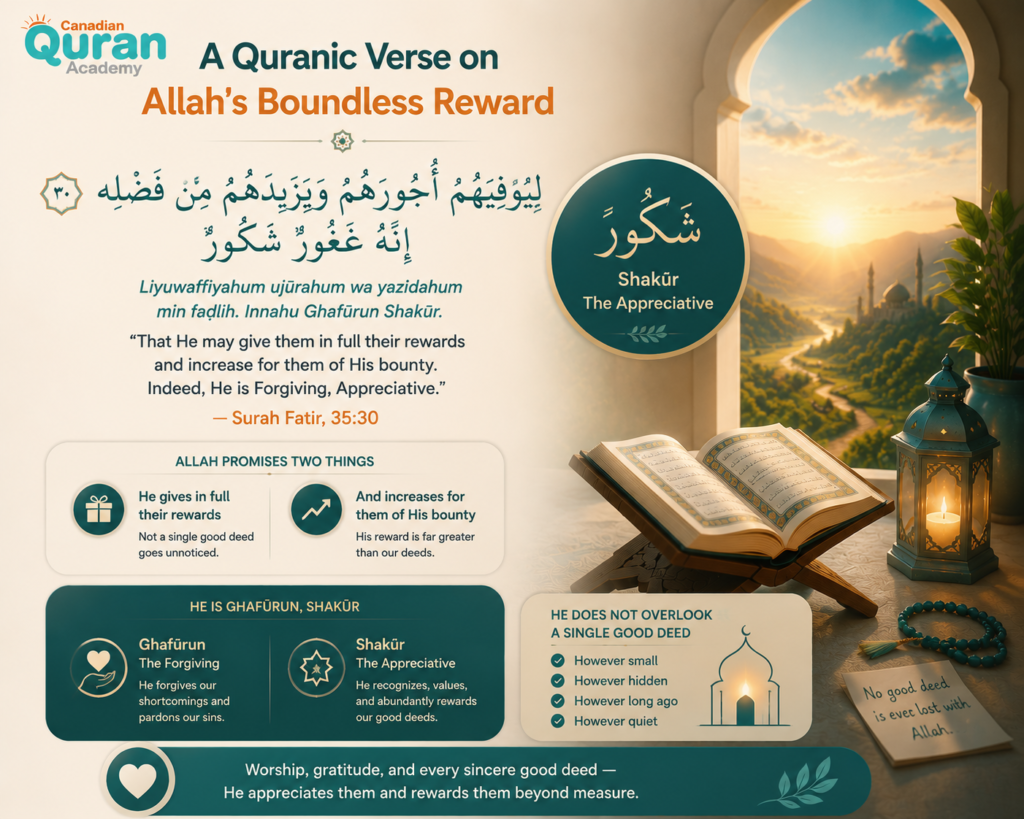
لِيُوَفِّيَهُمْ أُجُورَهُمْ وَيَزِيدَهُم مِّن فَضْلِهِ ۚ إِنَّهُ غَفُورٌ شَكُورٌ
Liyuwaffiyahum ujūrahum wa yazīdahum min faḍlih. Innahu Ghafūrun Shakūr.
“That He may give them in full their rewards and increase for them of His bounty. Indeed, He is Forgiving, Appreciative.” — Surah Fatir, 35:30
Allah is described here as Shakūr — the Appreciative. He who recognizes, values, and abundantly rewards the deeds of His servants, often far beyond what those deeds deserve. He does not overlook a single good deed, however small. He does not forget a quiet prayer, a moment of gratitude, or a sincere act of worship performed in private.
The pairing of Ghafūr (Forgiving) with Shakūr (Appreciative) is one of the most merciful combinations in the Quran: He forgives your shortcomings and rewards your efforts. You come to Him broken and He meets you with both pardon and appreciation. Knowing this should dissolve any hesitation about returning to Him, about beginning again, about starting the Quran journey you have been postponing.
For those ready to begin — whether memorizing, understanding the Arabic, or building a consistent recitation habit — Hifz programs at Canadian Quran Academy are one of the most structured ways to build that lifelong relationship with His words.

Take the First Step Toward Quran Memorization with a FREE Trial Class
Live Class in Action
Watch how our instructors interact with students in real-time, focusing on interactive methods.
Start Your Quranic Journey in Canada
Join our vibrant community and learn with expert tutors through our flexible online platform.
Claim Your Free TrialDeepen Your Understanding of Shukr with Canadian Quran Academy
Understanding the Quran goes beyond reading its words. True connection begins when you recognize the meanings behind the verses, recite them with proper Tajweed, and apply their guidance in your daily life. Every step toward understanding Allah’s words is a step toward deeper faith and gratitude.
At Canadian Quran Academy, our qualified Quran teachers provide personalized one-on-one online classes tailored to your level. Whether you’re starting with Quranic Arabic, learning Tajweed, or seeking a deeper understanding of the Quran, our structured approach helps you progress with confidence at your own pace.
Start your personalized Quran learning journey with Canadian Quran Academy today.

Our Quran Courses
- Quran Online Academy
- Quran Recitation Classes
- Quran Reading Classes
- Online Quran Classes for Kids
- Quran Classes for Adults
- Quran Classes for Female
- Learn Quran Course for Beginners
- Quran Memorization (Hifz) Course
- Tajweed Course for Adults
- Tajweed Course for Ladies
Start Your Quranic Journey in Canada
Join our vibrant community and learn with expert tutors through our flexible online platform.
Claim Your Free TrialConclusion
These ten Quranic verses on Shukr paint a complete and demanding picture of what true gratitude looks like. It is not an occasional Alhamdulillah. It is a state of being — recognized in the heart, spoken on the tongue, and expressed through the limbs in acts that please Allah.
Allah promises increase to those who are grateful (14:7). He places Shukr beside the very act of worship (39:66). He tells us our gratitude benefits no one but ourselves (31:12). He describes Himself as Shakūr — the Appreciative — who sees every deed and rewards beyond its measure (35:30). And He reminds us, twice across these verses, that those who are truly, deeply, consistently grateful are few (34:13, 7:10).
That rarity is the invitation. May these verses be the beginning of your journey toward being counted among them.
Frequently Asked Questions
The Quran presents gratitude as a defining quality of faith, raising many important questions about its meaning and practice. Here are clear, Quran-based answers to some of the most common questions about Shukr in Islam.
What is Shukr in Islam according to the Quran?
Shukr in Islam means gratitude to Allah — expressed through the heart (genuinely recognizing His blessing), the tongue (saying Alhamdulillah and praising Him), and the limbs (using His blessings in ways that please Him). The Quran presents Shukr not as an optional virtue but as a direct command tied to worship, as in Surah Az-Zumar 39:66, where Allah commands: “Worship Allah and be among the grateful.”
How many times is Shukr mentioned in the Quran?
The root ش-ك-ر (Sheen-Kaf-Ra) and its derivatives — including shukr, shākir, shakūr, and ashkara — appear approximately 75 times across the Quran. This frequency reflects how central gratitude is to the Islamic worldview, appearing in the context of worship, blessings, wisdom, provision, and the Day of Judgment.
What does Allah promise those who are grateful in the Quran?
In Surah Ibrahim 14:7, Allah makes an unqualified promise: “If you are grateful, I will surely increase you.” Scholars explain this increase is not limited to material provision — it includes barakah, contentment, strength of faith, and closeness to Allah. The Arabic construction (lam + emphatic nun) makes this one of the most emphatic divine promises in the Quran.
What is the difference between Shākir and Shakūr in the Quran?
Shākir (شَاكِر) refers to one who expresses gratitude — an act. Shakūr (شَكُور) is an intensified form describing one whose entire character is defined by gratitude — a state of being. In Surah Saba 34:13, Allah uses Shakūr when He says “few of My servants are grateful,” setting the higher standard as the goal. Interestingly, Allah also describes Himself as Ash-Shakūr in Surah Fatir 35:30 — the One who appreciates and abundantly rewards even the smallest good deed.
Is Shukr connected to Arabic beginners’ learning in the Quran?
Understanding the linguistic roots of words like Shukr — their meanings, their intensified forms, their grammatical structure — is only possible when you studyArabic from its foundation. Many Muslims recite these verses in Salah daily without knowing what they are saying. Learning Quranic Arabic closes that gap and transforms every recitation into a conscious act of gratitude.






Leave a Reply